Cadence Scheunemann
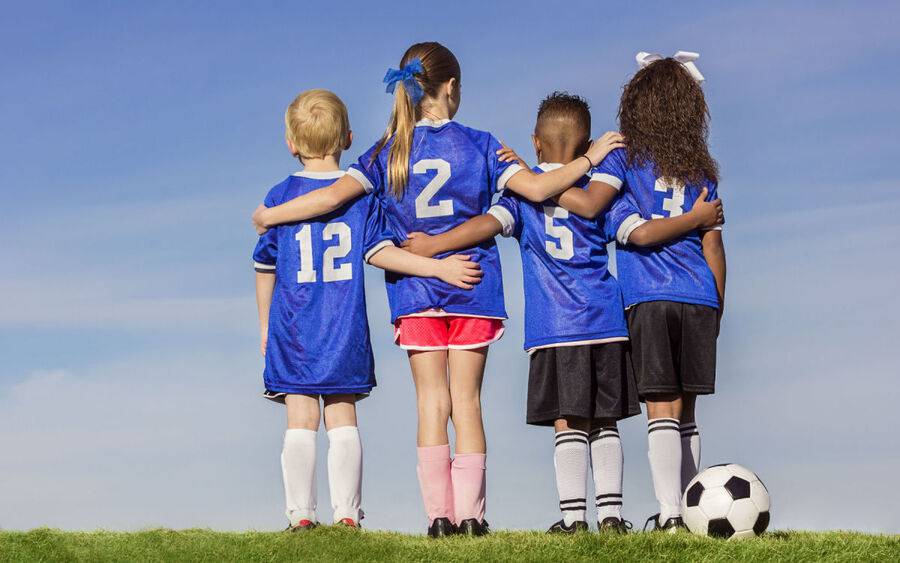
Youth sports have been impacting society's children for centuries. Youth sports are athletic events that people under the age of eighteen, and typically over the age of five, participate in. Kids can participate in a wide range of sports, including, baseball, soccer, horseback riding, running, and golf. Sports such as these give kids a chance to make new friends, develop emotionally, and allow them to cultivate sportsmanship. However, kids may end up developing streaks of competitiveness along with the development of their new skills. Competitiveness can be good and it can be bad, that is what we are here to talk about today.
Competitiveness in youth is seen as good by many people, that's why so many parents put their kids in organized sports! Through participating in sports, kids' abilities academically, socially, and emotionally increase rapidly. This can lead to a better life for those children later on. One study has even found evidence that "former competitive high school athletes earning 5%-15% more [money] across their careers, than students who did not participate in organized sports [as kids]" (Oberschneider). If kids are guaranteed a better job, just from playing a game when they are young, why wouldn't someone want to put their kid in a sport?
Youth sports can give incredible benefits to the kids participating in the sport, but the downsides to participating in high-demand situations are many. As children begin to move up in the ranks of their sport, more will be required of them. Moving up leaves them with less time for themselves and the fees continue to rise. According to Oberschneider, "families are spending as much as 10 percent of their incomes on their children’s sports. With... [up to] $20,000 annually"! Some parents aren't willing to hurt their fragile finances just to increase their kid's chance at a job by a mere 5%. To continue, pressure on kids to perform well in sports situations, "can lead to a host of larger psychological problems and harmful behaviors such as anxiety, substance and alcohol use, steroid use, and eating disorders" (Oberschneider). Kids should be playing a sport to have fun, and if the game is stressing them out, it isn't a game anymore.
Youth sports competitiveness isn't just in the youth, the parents get competitive too, and the ways parents react to a lost game can be a real problem. Many parents scream at their kids from the sidelines, letting them know all too well if they made a bad pass, or messed up the score. Some parents are just trying to help their kids out, thinking "sports will be... [my kid's] ticket to college, even though only 1% of high school athletes get full-ride college scholarships" (Elliott). Encouraging their kids to get into a good college by doing good in sports isn't really encouraging them.
In all, I believe youth should show competitiveness in sports, it's what makes sports fun! For kids to have the chance to think positively about themselves winning a game or scoring a touchdown is super important. However, parents shouldn't be competitive! Too much pressure from parents can cause a kid to not learn the valuable skills that are being applied in youth sports.
Works Cited:
Elliott, Sonya. “How to Handle Extremely Competitive Sports Parents in Youth Athletics.” Stack, 12 Nov. 2021, www.stack.com/a/how-to-handle-extremely-competitive-sports-parents-in-youth-athletics/.
Oberschneider, Michael. “The Good, the Bad and the Ugly of Competitive Youth Sports.” Blue Ridge Leader & Loudoun Today, 29 Apr. 2021, blueridgeleader.com/the-good-the-bad-and-the-ugly-of-competitive-youth-sports/.